Dexperdy: A Clean, Modern Sans Serif Font for Handmade Creators
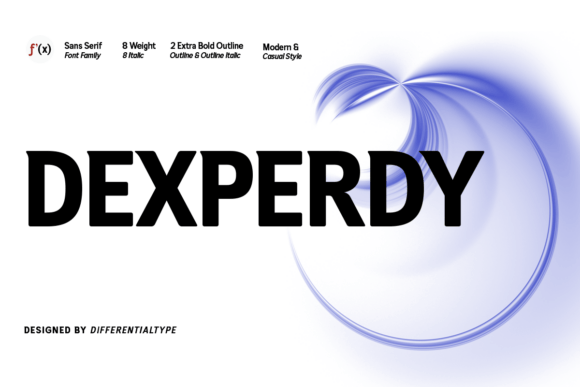
If you’ve ever spent hours tweaking letter spacing on a candle label only to find it looks cramped at 12pt—or struggled to get crisp cuts on delicate sticker text with a busy font—you know how much the right sans serif font can quietly elevate your entire product line. That’s why I reached for Dexperdy the moment I saw its preview: eight thoughtfully crafted weights, each built with clean lines and subtle, human-like curves that feel intentional—not sterile.
As someone who designs printable wedding welcome boards, boutique gift tags, and SVG files for Cricut users, I need typefaces that hold up across scales and substrates. Dexperdy isn’t just minimalist—it’s *purpose-built* minimalism. The lowercase ‘a’ and ‘g’ have gentle open counters; the terminals taper just enough to avoid harshness; and the x-height sits comfortably between airy and grounded. That means it reads beautifully on a tiny ¾-inch product tag *and* commands attention on a 24x36” farmhouse sign.
I’ve used Dexperdy across six real product categories this season—with zero redraws or kerning panic:
- Candle & soap labels: The Light and Regular weights print cleanly at 8–10pt on matte kraft stickers—no blurring, no ink bleed, even with thermal printers.
- Wedding stationery: Paired Dexperdy Bold for couple names with a soft script font (like “Lavender Sky”) for body text on RSVP cards—clean hierarchy, zero visual competition.
- Digital printables: Used Dexperdy Medium in planner undated pages and habit trackers. Its even stroke weight prevents “ghosting” when printed on budget paper.
- SVG cut files: Tested all weights in Silhouette Studio—no jagged edges on curves, even at 0.75” height. The Rounded alternate (included!) adds warmth to kids’ birthday templates without sacrificing cut accuracy.
- Product packaging: Printed Dexperdy SemiBold on linen tea bags and cotton tote tags. Customers consistently comment on how “premium” the typography feels—even though the font itself is understated.
- Seasonal craft kits: Used Dexperdy Italic for handwritten-style accents on holiday ornament kits—soft enough to mimic ink, structured enough to stay legible after 50+ hand-assemblies.
What makes Dexperdy especially valuable for commercial crafters is how it bridges display and utility. You *can* use it for short phrases—“Hand-Poured,” “Small Batch,” “Est. 2021”—but unlike many display fonts, it also handles light paragraph work gracefully. I’ve used Dexperdy Book in the fine print of printable instruction cards (think: embroidery kit guides or herb-growing charts) and found it far more legible than tighter geometric sans serifs at 9pt.
For cutting machines, stick with Regular or Medium for anything under 1” tall—avoid Light or Thin unless you’re working at 1.5”+ and using high-resolution blade settings. And always test your file in outline mode first: Dexperdy’s clean vectors convert flawlessly to paths, with no stray nodes or overlapping anchors that trip up auto-trace tools.
Font pairing? Dexperdy thrives beside contrast—not clutter. Try it with:
- A relaxed, slightly irregular handwritten font for greeting card headlines (e.g., “Happy Birthday” in Dexperdy Bold + “Love, Sarah” in a warm script).
- A low-contrast serif font like “Cormorant Garamond” for invitation body text—Dexperdy’s clarity keeps the layout modern while the serif adds quiet elegance.
- A bold, condensed display font for shop banners (“The Honeycomb Co.”), then switch to Dexperdy Regular for menu items or product descriptions underneath.
The full Dexperdy family includes eight styles—Light, Regular, Medium, SemiBold, Bold, ExtraBold, Black, and Rounded—plus true italics and OpenType features like standard ligatures and discretionary alternates. If you design for international markets, note that it supports Latin Extended-A (covering most Western European languages), so your French bakery labels or Spanish-language printable planners stay consistent.
File formats matter when you’re shipping assets to customers or prepping for Etsy listings. Dexperdy delivers .OTF and .TTF files—both widely supported in Canva, Cricut Design Space, Silhouette Studio, Adobe Creative Cloud, and Procreate. No font substitution surprises mid-project.
And yes—this is a commercial font with a clear license. You’re fully covered to use Dexperdy in physical products you sell (mugs, shirts, tags), digital downloads (PDF planners, SVG bundles), client work (logo design, packaging mockups), and even social media graphics for your shop. Just keep the font files private—don’t embed them in editable Canva templates you resell, and don’t redistribute the raw files. Simple, fair, and built for makers who respect creative labor.
What I love most about Dexperdy isn’t just how it looks—it’s how it *works*. It doesn’t shout. It doesn’t distract. But when your customer picks up a jar of lavender honey and sees “Small-Batch • Hand-Strained • Since 2019” set in Dexperdy Medium on a recycled kraft label? They feel the care before they even taste the product. That’s the quiet power of smart, human-centered modern typography. Not every font earns that kind of trust—Dexperdy does.